
The pharaoh is dead. Inconveniently dead. As Sekhemkhet’s body is being prepared, his inner circle is wondering what to do about the unfinished state of his burial complex. It was meant to be a stunning megalith that carved out the sky above the necropolis of Saqqara to memorialize the king who proudly wore both the Hedjet and the Deshret, the crowns of Upper and Lower Egypt. It was likely intended to surpass the grandeur of famed architect Imhotep’s masterwork: the burial site of Sekhemkhet’s direct predecessor, Djoser. Instead, the monument meant to represent the height of his achievements stood a diminutive 17 feet tall.
Thousands of years later in the 1950s, both Sekhemkhet and Djoser’s pyramids catalyzed the death of another Egyptian, Zakaria Goneim. Though his death has been largely forgotten, its circumstances could be the missing piece to uncovering the truth about a major present-day scandal.

Step Pyramid of Djoser, courtesy of the Library of Congress public image archives
I: Revolution
The British had occupied Egypt since the 1882 Anglo-Egyptian War and, beyond that, maintained power over Egyptian politics through their military presence in the Suez Canal--a position afforded by the 1888 Convention of Constantinople. By the mid-20th-century, they had captured control of the flow of government finances following a bailout of the Egyptian royal family. This state of affairs was framed by the British as a paternalistic relationship, referred to in contemporary literature as “the veiled protectorate."
In 1952, anti-imperialist and anti-monarchist tensions exploded, resulting in a coup led by Gamal Nasser and General Mohamed Naguib that toppled King Farouk, considered a figurehead that acted on behalf of European interests. By the mid-50s, the Republic of Egypt was established, the Suez Canal was back under Egyptian control, and immense cultural shifts were underway.
II. Discovery
When you think of the golden age of Egyptology in general cultural touchstones, you wouldn’t be blamed for citing English Egyptologists from the ‘20s like Howard Carter, especially his discovery of Tutankhamun’s tomb. Or, even earlier, the Victorian habit of sacking graves to turn mummiesinto powder for use in quack medicines and paints for the wealthy. But in the ‘50s, post-revolution, the British and French chokehold on the antiquities market had been diminished. The thirst for artifacts to furnish exhibits in European and American museums and personal collections, however, had not.
This shift in dynamics allowed Zakaria Goneim, an Egyptian, to become Chief inspector of Upper Egypt.
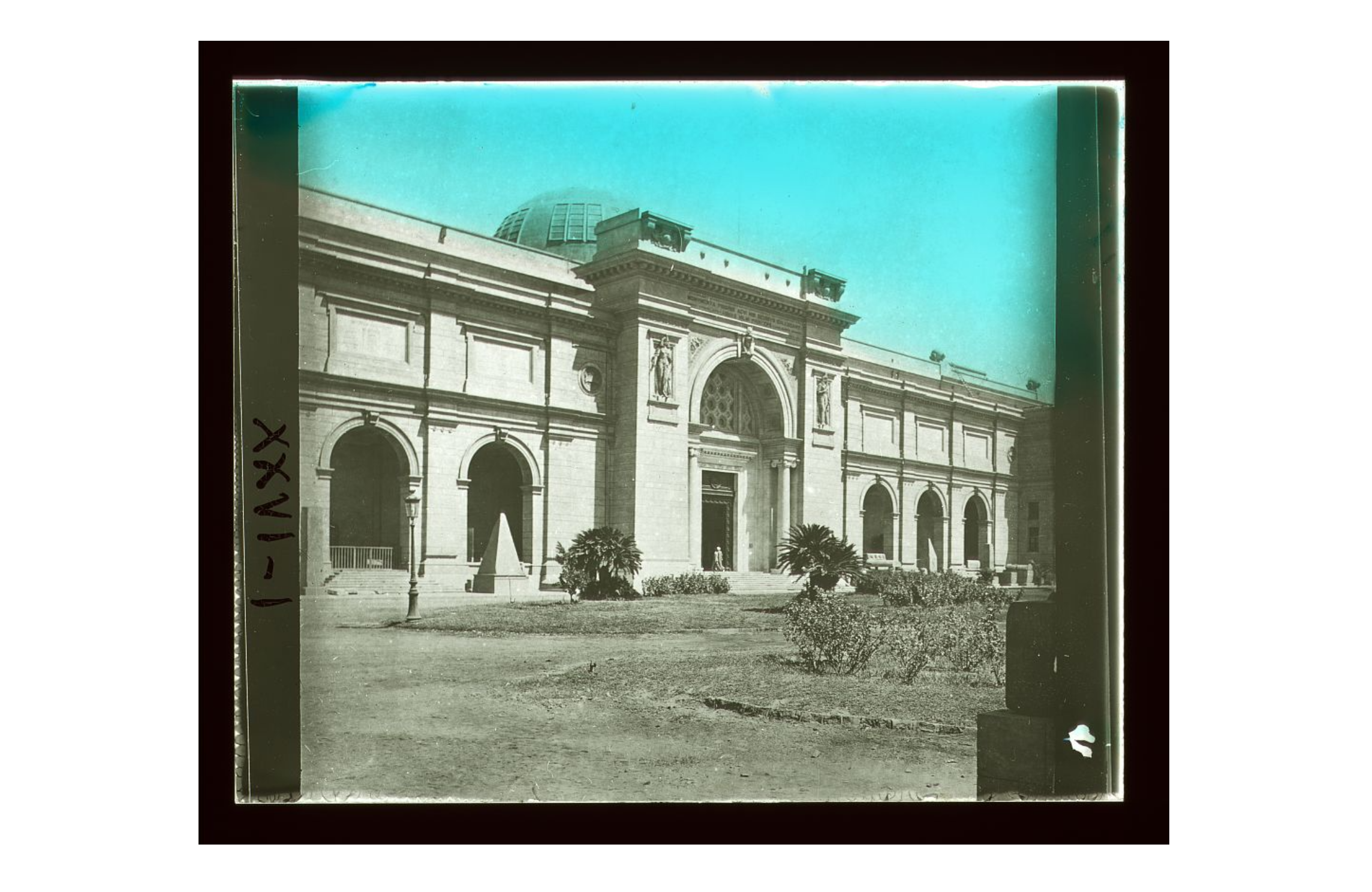
Egyptian Museum, Cairo. Public domain
While excavating at the Unas complex, Goneim noticed a squat structure in the desert. On first examination, he believed it to be a mastaba, a type of flat, rectangular tomb–a less-grand counterpart to the better-known pyramids. But, on closer inspection, he found it was an unfinished step pyramid later identified as the complex designed for Sekhemkhet.
Once the tomb walls were breached there were two major shocks. The first was that it was seemingly untouched. The second was that when the sarcophagus was unsealed and the heavy, alabaster cover was removed, it was empty.
The empty sarcophagus was a disappointment to many in the media who were expecting a Tuttenkhamen-esque discovery, complete with a mummy and a supposed curse. Despite the lukewarm reaction to his discovery, Goneim released a book, The Buried Pyramid, and set off on an international speaking tour. Around the same time, several artifacts from Djoser’s complex had disappeared from the warehouse at Saqqarra. The finger was, without a shred of proof, pointed at Goneim.
Throughout his career, Goneim had pushed for Egyptian-led archaeology teams and advocated for keeping antiquities in Egypt. Bernard V. Bothmer wrote in his diary entries about how tight a ship Goneim ran, from investigating vandalism at digs to keeping tight control over granting permits to European academics. In his books, he thanks the Egyptian Museum Cairo for allowing him to take updated photos of artifacts he had discovered. In short, by all accounts he was not the kind of person who would participate in antiquities smuggling. His high-ranking position and the general post-revolution climate in fact stood in the way of these illicit dealings. Under the new, more-regulated system, Europeans who wanted artifacts resorted to more complicated means, like using diplomats as mules because their luggage was usually not subject to searches.
Despite fierce pushback from his colleagues, notably Jean-Phillippe Lauer, Goneim was harassed, repeatedly interrogated, and widely discredited as a trusted archaeologist. In 1959, Lauer found the lost vessels; they’d apparently been catalogued incorrectly. Not stolen. But he exonerated his friend too late.
III. Death
Two days earlier, Zakaria Goneim was found floating in the Nile on January 12th, 1959. There’s no available documentation of his autopsy, if one was even done in the first place. Officials marked it as a suicide, a result of undue stress from the recent theft scandal. Western media printed obituaries claiming influence from supernatural powers.
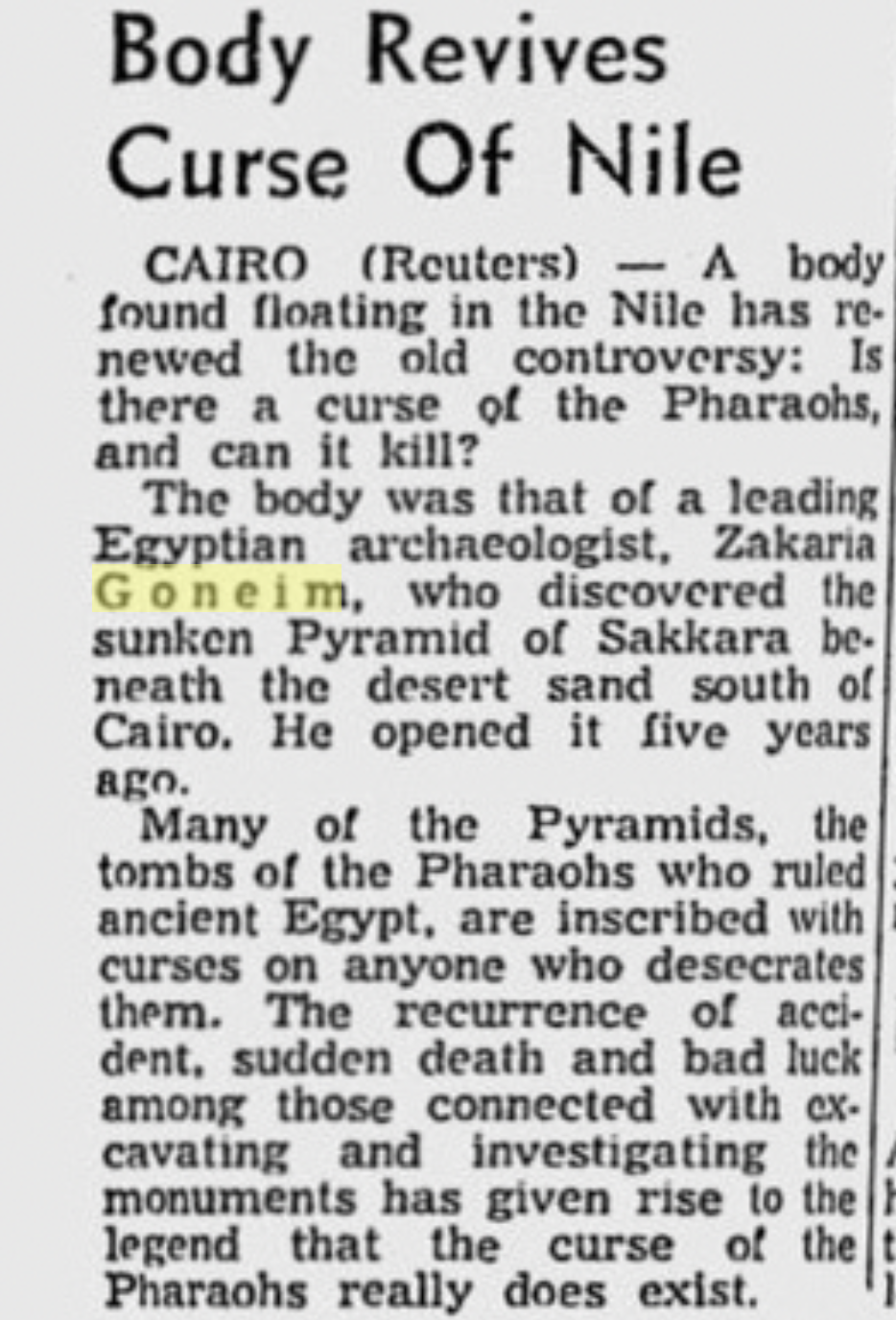
Obituary, Goneim. Reuters.
To me, the whole thing stank.
A man who was a major inconvenience to European collectors and an easy scapegoat was accused of theft at the height of his career? The objects were possibly moved by someone to appear stolen while he was away on a book tour? He shows up dead when there’s legitimate pushback to his persecution?
Several sources mention that friends and family believed he was murdered, though there is little primary source evidence of their convictions. I reached out to a few Egyptian agencies to see if any documentation of an autopsy or investigation was available. No luck. Turmoil in the late-20th century meant many lost documents and many dead ends for me. With little to go on, I phoned up a friend in Egypt to ask about bridges.
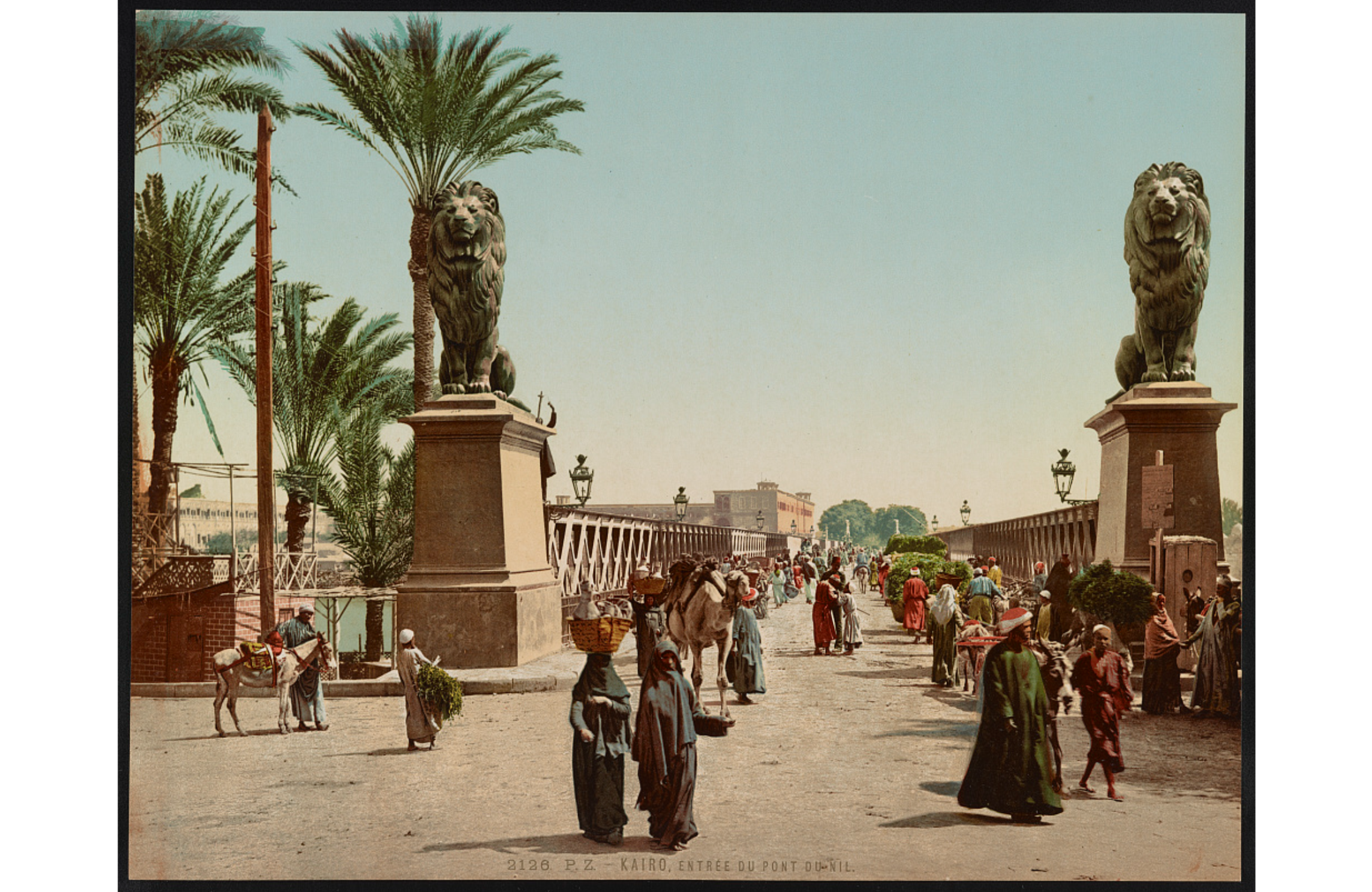
Various articles and obituaries describe Goneim’s suicide as follows: distraught over the allegations of theft, Goneim flung himself from the Qasr El Nil Bridge which connects Zamalek Island to downtown Cairo. There were no witnesses to this event. He was identified by documents in his pockets.
The phone line went silent for a moment after I recounted this series of events. My friend eventually spoke up: “there’s no fucking way.”
If you look at Qasr El Nil Bridge, the first thing you notice is the height. Or lack thereof. It sits squat over the Nile, maxing out at just a few feet above a standard diving board. In 2015--as a stunt--television host Mamdouh El-Shenaw pretended to attempt suicide from Qasr El Nil. During his broadcast, he actually did fall into the water. But walked away completely unscathed, discounting the level of lethality of a bridge jump.

I doubt we will ever get true closure on his death. It’s unlikely there will ever be enough proof in either direction.
In 2008, Egyptian Antiquities Director Dr. Zahi Hawass lamented Goneim’s tainted legacy: “a committee came without any reason… They began to accuse this honest man, Zakaria Goneim.” Beyond his words of support, I would find Dr. Hawass had another connection to my research into Goneim.
IV. Scandal
In 1998 the St. Louis Art Museum acquired the latest addition to their Egyptian collection: the stunning funnerary mask of an ancient noblewoman dubbed “Ka-Nefer-Nefer.” Ka-Nefer-Nefer means Ka, twice beautiful. A name Zakaria Goneim lovingly gave her in his book The Buried Pyramid–after he discovered her tomb.
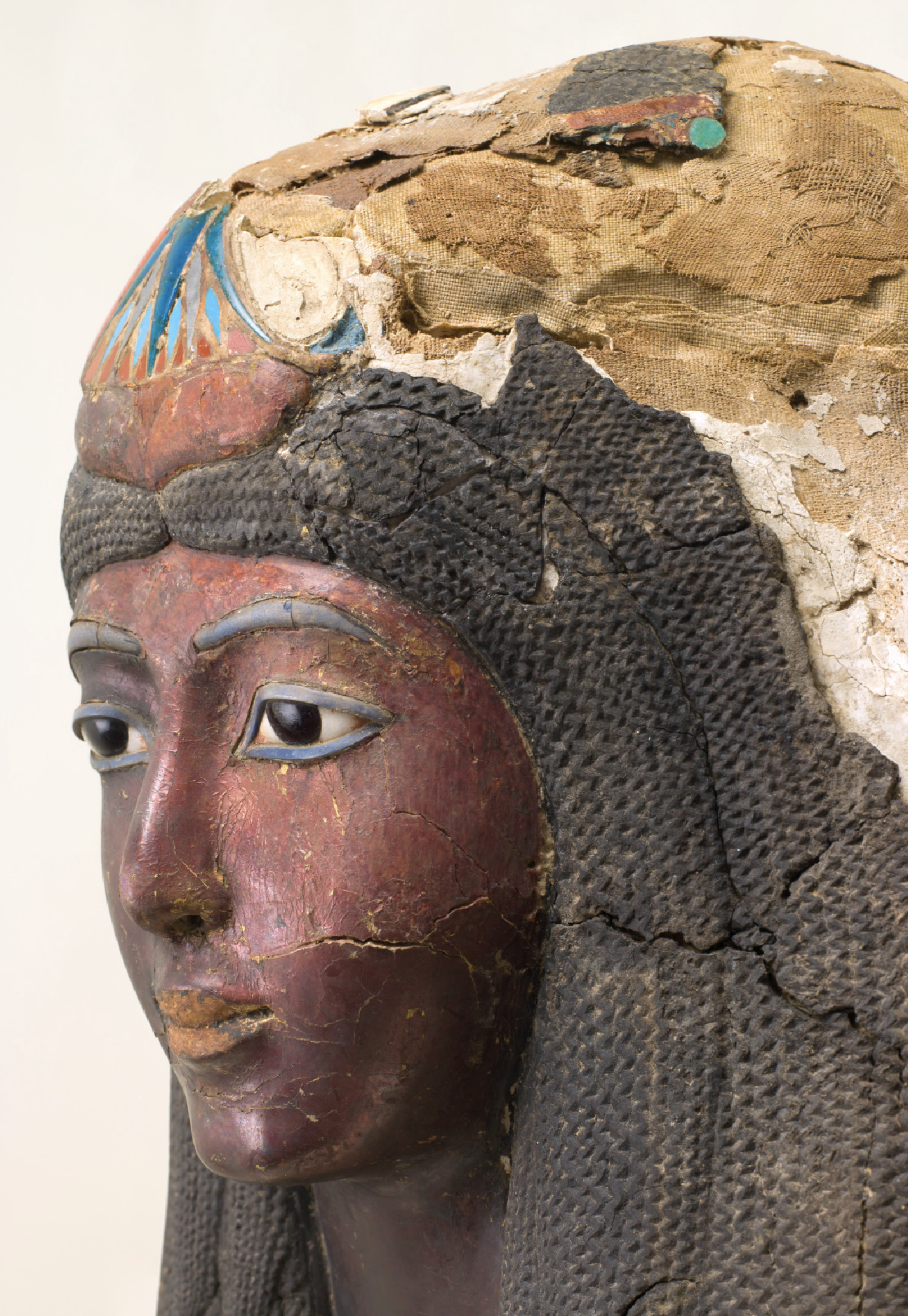
Mask of Ka-Nefer-Nefer, courtesy of SLAM
Ka-Nefer-Nefer’s mask reappearing after decades pushed Dr. Zahi Hawass to pursue legal action. Since there was no documentation of it leaving Egypt, it must have been stolen. He began the proceedings for repatriation.
In response, SLAM produced an odd record of provenance. Or, rather, two. In their official legal filings they claim it left Egypt, was put into the private “Kaloterna Collection,” was then acquired by a Croatian collector in Switzerland, and then Phoenix Ancient Art in Geneva. Phoenix Ancient Art then sold the piece to SLAM. According to documents they provided to The Riverfront Times in 2006, the mask took a pit stop in Brussels before entering the Kaloterna Collection. In either case, the crucial piece is whether or not the mask left Egypt legally.
From the now-archived article from Riverfront:
“The scholar, who is not named in the copy of the provenance the museum supplied to Riverfront Times, asserted that the documentation ‘suggests that the mask was never displayed with the other excavated objects [from Saqqara] and was probably awarded to the excavator himself. This would correspond with its appearance on the European art market soon after its excavation.’
Riverfront Times obtained a copy of the statement, which was authored by Peter Lacovara, curator of ancient art for the Michael C. Carlos Museum at Emory University in Atlanta. In a breezy correspondence dated October 8, 1999, eighteen months after the museum bought the mask, Lacovara writes, ‘That is good news about it being on the art market in '52. Egyptian nationals were allowed to keep a share of their finds, much as Europeans were given divisions.’”
This assertion doesn’t stand up. In an article titled “Egypt's cultural heritage in conflict situations: examination of past and present impact,” Nevine Nizar Zakaria of the Ministry of Tourism and Antiquities clarifies: “in response to the growing number of thefts and illicit trade in antiquities, the government passed, in 1951, Law No. 215 imposing harsh penalties on violators. This law strictly prohibited the removal of antiquities from the country unless Egypt owned multiple objects similar to those being exported. Furthermore, no artifact could leave the country without the approval of the antiquities department in writing, reviewed and signed by relevant agencies and museum experts.”
Besides, as a government employee, Goneim wouldn’t have been granted partage. Even if he had, there would have been a paper trail. Even if we pretend that he for some reason had been given the mask and that paper trail got lost somewhere along the line, then why would he have, in his books, referred to the mask as the property of the museum in Cairo?
Lavorca repeats the claim: “Goneim would be the only possible legitimate source for the mask coming onto the market."
Once again Goneim’s name is used in unfavorable circumstances. Another accusation he can’t defend himself against.
SLAM won their legal battle. Ka-Nefer-Nefer’s mask still resides in their museum. Her plaque reads, unceremoniously, “Mummy Mask, Egyptian, Dynasty 19.” No longer twice-beautiful Ka.