
I’m not big on music videos. My intense style of music appreciation revolves around a key ritual: all new albums must be listened to with no distractions. In a completely dark room. High-quality headphones. Front to back.
Le Belladone fucked up my routine.
In the midst of an illness that kept me from live shows, I turned to a binge of internet-browsing where I found Le Belladone’s disturbing and gorgeous catalogue of videos. Just like that, the hyperpop star made me a convert. I tracked them down to talk about it:
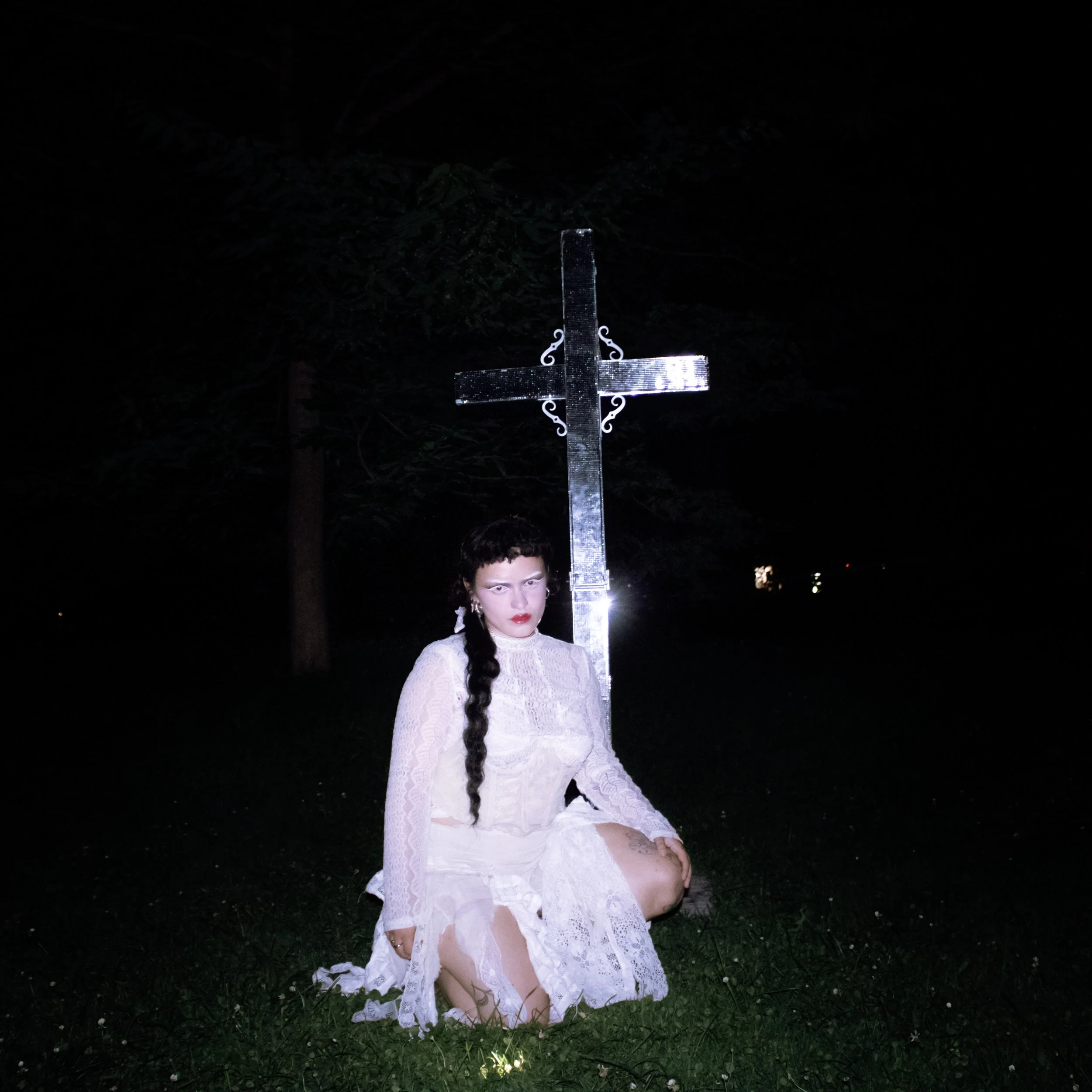
LB: For the music videos I've been doing this with my friends with no budget at all. And like, some of my videos are shot with my iPhone and a small digital camera. For most of the video clips I'm doing all the editing and the coloration and everything 'cause I'm an independent artist. When I say independent I mean I'm doing my makeup, my costumes, I'm doing everything. So it really means a lot when people appreciate what I'm doing.
I put my whole heart in this and all my time. I feel like when you have production teams or something it's because you have a label or money and that's both things I don't have. So I’m doing everything DIY and it's been fun.
PT: I'm very curious about what your trajectory looked like, then. When did you start making music?
LB: Music has always been in my life. My dad told me when my mother birthed me he was singing in the hospital room. So my dad was always singing to me and his dream was to become a singer. I used to sing with him all my childhood. He would make me sing on his little recordings for our families and friends.
I decided to pursue music 'cause I was always a weird kid growing up and I didn't quite fit in, I was writing music and putting costumes on. I was always recording myself with wigs on and in my Halloween costumes. It was always a part of me. I was always rehearsing with heels in my room imagining myself as Britney Spears or Madonna. My mom would be talking to me and I was like, “Don't come in my room. I'm rehearsing for when I'm gonna be a pop star.”
I ended up going to school to study music and lasted, like, three weeks because I hated it. I tried another school for a year and it was fine but I still hated it.
I was hungry to find a space that I would feel like I would fit.
I did a music contest in Montreal and I wrote all these songs for this contest 'cause I'm pretty big on deadlines and the adrenaline that comes with it. So I wrote thirty minutes of music for this, songs for this. Before that I was only writing songs in my bedroom.
PT: What's your taste in music like in general? What do you listen to?
LB: I like to listen to one song for a month. Or a remix of the song or covers of the song. So I like to listen to one song for a month or a few weeks. But I mostly listen to music in my car.
What calms me the most is hyperpop or punk, anything with big bass and distortion 'cause the vibration calms me and I can’t think because the music is so full.
I also listen to my best friend’s music. So right now I'm listening to her mix and master for her album. Her name is Fyore.
PT: What's your songwriting process like?
LB: I'm co-producing my music, so I make advanced demos. Usually when it’s really late and I'm supposed to do something else or have something early. That's where I create, when it's raw 'cause I have a deadline or pressure so I can’t overthink anything and I just go straight with my most vulnerable self. I make beats at 3 AM in my bedroom and write songs on my iPhone for ten hours.
PT: With your music, lyrically it's very interesting, sonically it's interesting. But you also have this visual aspect with your music videos and an exaggerated persona. Where does that come from?
LB: Both of my families are pretty religious and spiritual. My dad's side is hardcore Christians. And then from my mom's side it's a more cult-ish religion.
I was baptized in my mother's religion. It's not really a religion, the line is blurred if it's a religion or a cult. Growing up that sort of imagery was always in my head: I grew up with pictures of the leader of the cult in my bedroom and all the rooms in our house and when I was going to my dad's family it was all crosses and purity culture.
All these ideas of submission, domination, higher powers. So to me, this could not escape my brain. I wanted to make art about it and create a safer place for me to interact with it. Because they will always be there. But now they're magical to me, subverted
PT: That’s pretty evident in your visuals, the religious iconography mixed with horror. And even the costuming, especially in “Au nom de la Mère et de la Fille,” is stunning. How is that made?
LB: Well, I mostly go to thrift store bins because it's cheap. I remake the clothes a bit and sometimes I, like, with the hat, I don't know the word in English but the big hat with the two cones: I made it. I create most of the clothes I wear and I have this consistent aesthetic because growing up the color white was associated with purity in both of my families. To me it's like I'm reappropriating this weird thing. So I consistently wear white and then make grotesque, gross art. So my makeup is exaggerated and my hair is too long and my nails are too long and they’re dirty. It's like playing with this imagery of purity--but making it dirty.
PT: In your music video “B*TCH” there’s so much flowy, bright white but you kind of personified this horror thing where you’re eating raw meat in the bathtub. It's freaky in a way that makes you want to dig into it.
Especially with the lyrics too, right? So many are about surviving violence and reclaiming femininity and that paired with the visuals magnifies it so much.
LB: I always liked watching music videos growing up so to me it was like I could not not make music videos. I also feel if I wanna reach an audience that doesn't speak French, they need to understand it by the imagery. I come with a look and not just music, I feel it all makes sense together.
It's definitely about reclaiming power 'cause femininity was always pushed onto me growing up. With my music I can distort this vision.
I've always liked makeup growing up but not the makeup that makes you look clean. The type that’s exaggerated and theatrical.
My body's a vessel to the art I wanna make, the pain I have but it’s playfulness yet grotesque.
PT: You've built what seems to be a persona within your music. How is that different from how you feel about your identity in your private life? How are those tied together and how are they different?
LB: I'm a person with so many layers, but in music it's simpler if you have a look that people can put their finger on and understand. So I mostly put out that layer of me.
Honestly, in my day-to-day life I'm mostly in PJs. I put all my energy into my music and art so I won't have crazy hairstyles and makeup when I'm creating.
But when it's time to make art I will be all weird and crazy and gross. But personality-wise, I'm the same–it's 100% me. I have no filter when I talk like with my friends or strangers which goes hand-in-hand with my music. I don't know how to do things when it's not to the fullest. I don't wanna diminish what I wanna say. I wanna say it fully. And to people that can take it, they will take it. And to people that are that can't take it, well, they will leave and that’s fine. Like, when it when I'm talking about like sexual violence, I won't use pretty words 'cause it's not pretty.
In my personal life I explore more of my masculinity, but to me I don't associate my masculine side with my art.
To me, my persona, in a way, is to cope and to create and it's an infinite source of this.
PT: Why do you think your musician persona is more feminine?
LB: Well, to me feminine people and women are so much more interesting than men. And just because I grew up watching women and even feminine men, like they put makeup on and they wear all those dresses and costumes and to me it's so much more interesting to see and to hear.
I feel the Quebec scene prefers comfort over discomfort. It isn’t so theatrical.
So a lot of the Quebec scene it's guitars and men singing most of the time. It’s easier to make money and to be more mainstream if you make folk music. But I don't make folk music at all. So I didn’t really listen to the music of the Quebecois because I didn’t see myself in it.
I was more on the francophone side of Quebec and I decided to be more curious about the anglophone scene and I've discovered many DJs and electronic artists and there is this genre existing in this, but it's more accepted within the English-speaking side.
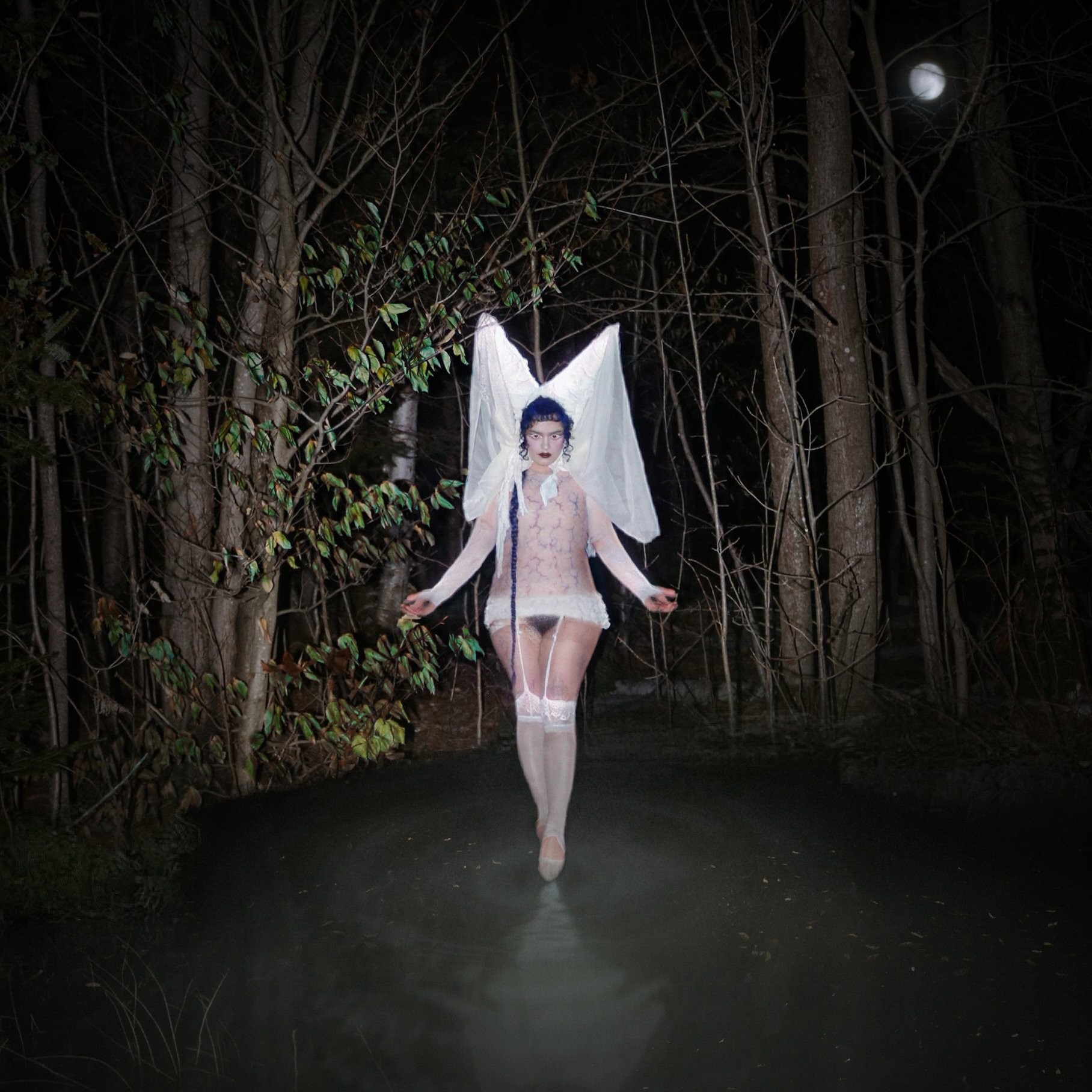
Album cover for Le Belladone’s latest release, Euchariste
PT: I’m excited to see what you’ll explore with your new album, what’s different about it compared to your existing work?
LB: There's stuff that is more experimental because my singles are more accessible than the album as a whole. The album is a bit more experimental. It's a bit crazier.
It's about how I've been sexualized from a young age and how I've managed to fall into that pattern and how I try to break it.
PT: Anything else that you just want people to know about you or your music or anything?
LB: Your uniformity is obedience. Stay weird, stay woke.
Le Belladone’s latest album is available on all streaming services starting June 5th. Visual spread available in the 2026 summer print edition of Poison Tree.
Check out Le Belladone and their collaborators: @LeBelladone @Fy0re @zea_calla @bysloanlucas