
My ballot is a list of unopposed nominees this year, a touch-screen coronation for machine men and women who waited their turn and reached the front of the line. For me, there is no line. I’m in and out in a minute. I don’t vote for anybody running unopposed; there’s something I can’t stand about that. Even the unassailable logic of lesser-evilism and the history of struggle for the franchise – the only things that get me out of bed and holding my nose a few dozen minutes earlier than the time I need to leave for work – can’t justify that kind of sycophancy, so I end up voting on the ballot questions and leaving the rest blank. Judging by the desolation of the polling place, most people would sensibly not bother to do even this. What if they held an election and nobody came? An election, like a war, requires the active consent of a portion of the population, and its passive acceptance by the remainder. But it only takes a few bad apples for a war to destroy humanity, and barrels and barrels of good ones for an election to advance us. These days, it’s all too easy to throw a few sour apples in every barrel.
Early in the morning on November 5, 2024, I was jolted awake from a dream by the fluttering of a curtain in my bedroom. 47 days from the winter solstice and the nights were still warm enough to sleep with a window open. The morning light came in flashes, like a battering ram at the doors of my perception. It was quite a surprise to have woken up nestled into the sheets of my bed. In the delirium of my dream state, I had seen the entire front end of my apartment blown out in the aftermath of a missile strike – an image that my subconscious had lifted from the streets of Beirut, one of a number of places from whence photos of apartment blocks peppered with hollow, charred ruins created by Israeli strikes had circulated around the world in the 396 days since Israel began its campaign of relentless, violent expansion in the Middle East. I watched myself, from outside my own body, digging through the rubble, looking for my girlfriend and her cat. Slow to process what I had witnessed, beyond concluding that it had not really happened – at least not to me – I rolled out of bed and pressed on with my plan for the morning. The lines were long at the polls on that cool November morning.
The message of my dream could not have been clearer. If I hadn’t really dreamed it, I’d say it was a little on the nose: this compromise you are making will set you down the road to your own ruin. When you countenance evil against any other being on this planet, you bring it closer to your own doorstep. So why didn’t I listen? When I was a boy, I once sat in the back seat of my parents’ car, watching a fly buzz against the glass of the window. Witnessing the intense vulnerability of this creature, it somehow occurred to me that I too could have been born as a fly. I listed off the animals I knew to myself: a cheetah, a mouse, an elephant, a dog, and realized that my birth as a human was a very lucky accident. From that point on, I couldn’t shake the awareness that my existence is a roll of the cosmic dice. I found it harder and harder to bring harm to any creature without a really good reason, and found myself increasingly rejecting the conventional wisdom behind squashing bugs, eating meat, putting dogs on leashes and the like.
On one cold morning years later, I had discovered a centipede perched on the inside of a dirty dish in my sink, taking a drink from the standing water in the bowl. Grossed out, I flipped the faucet on and looked away, hoping to scare it off. Instead, when I returned, I found it drowning, flailing in the water. I felt sick for the rest of the day at what I had done to this creature who could have been me. And yet, the following summer, a friend of mine confided to me his relief that, despite being forced to deliver great suffering to lab mice in his work duties, he still felt pangs of guilt as we picked squash borer beetles from the underside of our cucumber plants and dropped them in a bucket of soapy water. I could stomach the soapy bucket full of dozens of the parasites, because I wanted my little part of the world to be a certain way, and it doesn’t involve them. Neither I nor my friend have been blessed with an absolute pacifist instinct, let alone the ability to put it into practice. Indeed, the vast majority of people in the world today must accede to the prevailing logic of bureaucratic rationality that complicates and obfuscates any consistent ethic of life.
That’s what I told myself as I waited in the hallway of the postindustrial warehouse ruin turned apartment complex, which doubles as my neighborhood’s polling place. In 2024, the same ethic that had attuned me to the never-ending scream of genocide in Gaza had led me to determine that I could not renounce my outsize influence as a swing state voter, because of the impact that my participation and mobilization of others could have on the millions of people the world over whose fates hung in the balance, between the left and right talons of the American bird of prey. Even as I held my own nose to vote for an architect of the Gaza genocide, and implored Pennsylvanians and Wisconsinites of conscience to do the same, I repeatedly warned those in my network living in safe blue states against using my swing state calculus to justify a Harris vote that would lack the material impact that could justify it. My counter-proposal to blue state liberals was that they match themselves up with a swing state leftist planning to vote third party and “trade” votes, maximizing their combined impact and minimizing their moral complicity.
The Trump administration’s campaign of brutality against immigrants and protesters, its attacks on Venezuela, Iran and Cuba, its dismantling of the administrative state and its re-imposition of electoral apartheid through red state redistricting – developments that have proven worse than even most alarmists expected – has vindicated my approach to the 2024 election, in a sense. The world would without a doubt be a better place if Donald Trump never returned to power. But the actual outcome of the election made my attempt to exercise some moral agency in the face of all-encompassing evil look more like an exercise in futility. Harris lost the election by 2.2 million votes, earning 6.2 million fewer votes than Biden did in his 2020 contest against Trump, while Trump picked up 3 million votes compared to his 2020 performance. The number of left-wing third party voters did not exceed the margin between Harris and Trump in the popular vote or in any swing state. If that number is doubled on the assumption that for every third-party voter, another leftist stayed home, Harris still comes up short. If every leftist in the United States had made the Sophie’s Choice to pull the lever for Harris, preserving the possibility of saving the child at the Rio Grande by forsaking the child in Rafah, it would not have made any difference to the outcome of the election. The historical forces that returned Trump to power were entirely beyond our control.
The possibility existed that my vote would contribute to an effort that, for all its faults, would materially improve the world, but in actuality, all I did was demonstrate to myself the extent to which I was able to lose my own humanity for table scraps that never came. But I’m too stubborn to let so stark a reminder of my powerlessness deter me from voting in even the most futile of elections. My efforts to exert some pull on the tug-of-war of history go beyond voting, and I’ve learned from those efforts how hard it is to make even the smallest change. I find myself back in the voting booth year after year, making pointless and humiliating choices, because voting doesn’t cost anything, and in spite of how futile it often feels, I still can’t find a justification for taking my hands off the rope and letting the other side pull unchallenged.
After submitting my pathetic, incomplete ballot, I set out toward the subway, making a brisk pace over the cracked sidewalk. The scenes of daily life in Philadelphia – a city known to outsiders for the role its open-air drug market in Kensington has played in America’s domestic opium war – have desensitized me to a great deal of the widespread suffering that pervades all aspects of local society. So my initial reaction was one of apathy when I walked past the live poultry market, where a truck had just finished unloading a fresh batch of caged birds, leaving a trail of feathers and sawdust between the street and the front door for pedestrians to step over. But when I glanced inside the building, I saw something unusual: a goose, waddling alone in the darkened room.
By the time I had reached the corner, I saw behind me that the goose had wandered out onto the sidewalk. In the mid-morning sun, temperatures were already close to their daily high of 98 degrees: the hottest temperature recorded on a day in May in Philadelphia history. I stopped and watched as a shiver ran down the goose’s neck and she twitched. She looked haggard, clearly uncomfortable, and disoriented. She stretched her wings out in a series of rigid flaps, and I wondered how long it had been since this bird had last been able to flex freely in the sun. Was this as free as she had ever been in her life?
I stood there, as paralyzed as this goose was, trying somehow to project my thoughts into her brain. Go, get the fuck out of here before they notice. Surrounded by overwhelming noise, motion and heat, the goose began an uneasy waddle toward the street, but stopped before stepping off the sidewalk when a car ripped by. She turned towards me, took a few steps, and decided against it. I must have appeared no different to her than the monsters that had held her in captivity. The only direction that remained in which to flee would require crossing back in front of the doors of the poultry market. I had only just begun to realize that my helplessness was making this situation worse when a masked man standing in the truck pointed an imperious finger at the bird and held it there, his glove at narrow cross-angles with the sun beating down above us. But he wasn’t looking back inside the building, he was looking at me. I looked up at him, elevated on his perch at the edge of the truck, as if hearing what he might have to say would resolve the situation. He didn’t say anything to me, of course. He just watched me, because he saw that I had the power to shape this situation’s outcome.
I have worked with people who have been on the inside of a slaughterhouse. When I was a landscaper, I asked a coworker of mine to tell me his story on a long drive to the stone yard. His first job in the United States was at a slaughterhouse in Nebraska, where he worked with “los Indios,” he told me, miming a peace pipe so I could understand that he was referring to Native Americans. I had always thought of indigenous land management practices as an aspect of the debate over the relationship between humans and the natural world that injects some necessary nuance into a conversation that is often loaded with emotionally charged, sweeping generalities. The bleakness of the fact that the enclosure of native peoples in the 300+ years since the apocalypse of Columbian contact had led to their coerced participation in systems of industrial farming was not lost on me. “It’s fucking bad in there,” he told me, describing his experience cleaning blood and shit off the floor in the middle of the night. “Now I work outside,” he said pridefully, as we parked at the stone supplier and stepped into the sweltering sun.
I didn’t always get along with this coworker of mine. He was an organic leader among our largely immigrant work team; one of only a few among them who could drive the company trucks, operate heavy machinery, install sprinklers and speak passable English. He decided when we bust our asses, and when we “take it easy.” He used these advantages to advance himself, refusing to teach others how to use machines that increased his value as a worker, and using his command of language to give an interpretation of events to the boss that was favorable to him. “You fucking stupid or something, man?” he had said to me once when I was taking things slow, grabbing the garden clippers from my hand and throwing them into the grass. “Everybody here working together, but not you. I tell the boss, you no come back.” His intervention was crude, but effective. I learned to work with the team.
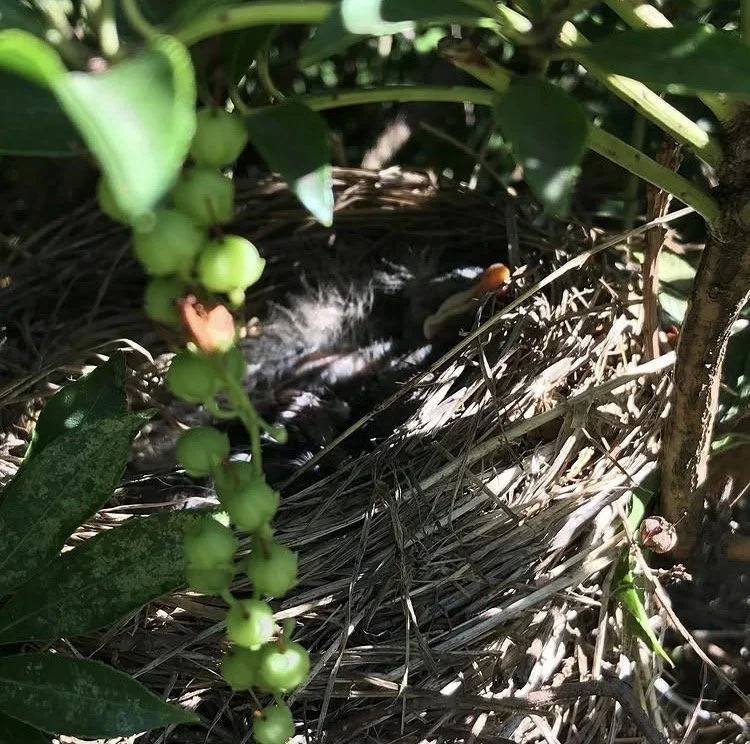
A few weeks later, we were trimming hedges on a backyard patio when I heard him turn his trimmers off. He had finished most of the hedge he was working on, but left a small portion on one side uncut. I asked him what happened, and he called me over to take a look. He pulled the branches back on the bush, revealing a nest full of baby birds. “What should we do?” I asked him. He handed me his personal pair of garden clippers, pointed at the untrimmed section and said “No con la máquina. Take it easy.”
Having given up on communicating with the bumbling goose on the Philadelphia sidewalk, and realizing that my paralysis was only blocking her escape, I made one last attempt at telepathy. I gave the masked man in the truck a rueful glance. Take it easy man, let this one go. With the clock running out on the punctuality of my commute, I turned to cross the street. The situation advanced at a breakneck pace behind my back. By the time I had reached the median of the road and turned around, the goose had indeed begun to wander past where I was standing, turning left down the sidewalk, away from the main road. But another worker had emerged from inside the poultry market, a net in one hand and the corpse of a bird, held by the neck, in his other hand. Slaughter personified. He began to chase after the bird, whose survival instincts had finally kicked in. She began to run, then flapped her wings, almost ready for takeoff, when yet another worker emerged from the back door of the building, grabbing the goose by her neck just as her feet had left the ground.
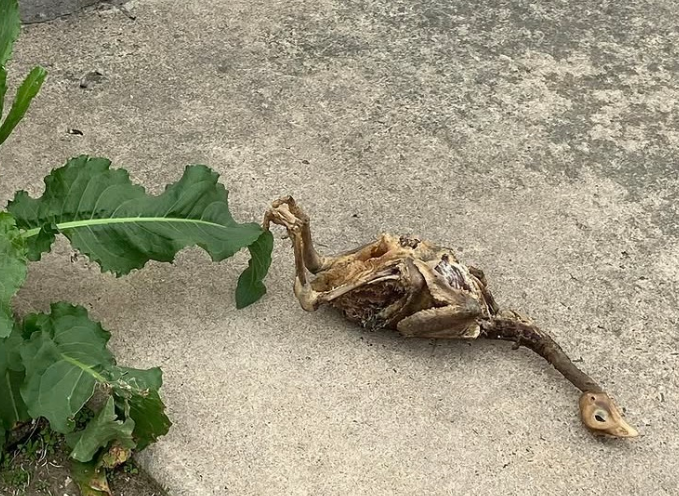
Much ink has been spilled on the left over the relationship between animal welfare and a broader radical politics. The prevailing view seems to be that vegans and others who concern themselves with animal rights are insufficiently concerned with human rights by comparison, that they are culturally insensitive and/or paternalistic toward non-Western culinary and environmental stewardship practices, and that they are too flippant in comparing the suffering of animals to the plight of humans. These arguments are not without their merits, and activists against animal exploitation are not without their faults. But this discourse largely serves to obfuscate an essential truth: the exploitation of animals and the natural world is at the root of all human hatred and misery. The organization of labor, control over reproduction, and awareness of heredity – the trinity of material bases for systems of intra-human exploitation – originate from the ancient technologies of plant and animal domestication. Without them, we would be but helpless birds, squinting at the sun. But with them, magnificent civilization stacks its pyramids of blood ever higher.
The systems of our perpetuation are immensely complicated, and have become adept at creating internal contradictions of interest that shatter the shared interest in liberation of all oppressed beings into fragmented avenues for advancement that pit all the crabs in the bucket against each other. What would have happened if I had acted directly on my own morality outside the poultry market, chasing that goose past the slaughterhouse doors, down the street until it took off and flew away? I would have ruined the day of a couple of immigrants, and given the goose an indeterminate chance at survival in the inhospitable environment of Philly’s urban core. I also would have been late to work. I am sure that this would have been the right thing to do, but it demonstrates that there is hardly ever such a thing as an easy victory. It is not just voting that demands a calculus between conflicting axes of oppression, but direct action too.
I have tried to understand the lessons that the universe has conspired to teach me on these last few election days, but I am still lacking a clean takeaway. If I can draw any conclusion from my experience of these various interlinked events, it’s that a system of thought that can lay out a plan for the emancipation of all living beings is practically an unsolvable puzzle, but that simple efforts to pull history in the right direction are nonetheless absolutely necessary. No matter how dark our times become, no matter how subsumed any one of us becomes in systems of overwhelming evil, there will always be a comparatively right and wrong decision from any standpoint. The right thing won’t always feel right, and it will rarely be without its secondary wrongs, but right it still is. If the universe has taught me anything coherent, it’s this: Do your best, let neither pride nor guilt get in the way.