
Aspect Ratio
We see the world through aspect ratios in the 21st century, we witness and experience the world through video and photo content and the method of that delivery has a highly consequential effect on that, even worming its way into the subconscious. If you’re over the age of 30, which I am not, you’ll have stronger memories of 4:3 content being delivered via television and 21:9 at the cinema and never the twain shall meet until 2006 in the UK when sky began to broadcast in digital HD and the whole market followed suit. TV however is not the primary mode of video consumption these days and as such the market has sought to keep up and meet those customer preferences and profit incentives, I’d argue to a noticeable artistic detriment.
I won’t be a total luddite, there isn’t a thing wrong with 16:9, the standard shape of picture you’re used to on television. There was, of course, an adjustment period from the 4:3 of the pre HD era and associated growing pains, but these were naturally overcome with time and experience shooting for projects in this medium. If I had to play devil’s advocate I’d like to briefly sing the praises of 4:3 television. It suits the smaller scale nature of television better than the semi-widescreen we received as a compromise between widescreen cinema and the taller image of older television. You’ll see less dead space in the frame, closer shots of characters in tighter cinematography, while still being capable of stunning establishing and wider shots à la Twin Peaks. The real beneficiary of widescreen television was the sports broadcast industry, seeing a greater portion of the pitch and getting that better feel for the flow of the game and players in space was huge for team sports on a rectangular pitch. The product improved and simultaneously so did revenue for these leagues at a rapid pace. There’s a good reason sports broadcasts will often be the testing ground for new and impressive camera and production technologies as well as ideal sizzle roll for television service providers. The issue facing video and its shape comes in the more modern, phone focused landscape. It’s turning cinematography metaphorically on its head and more literally speaking on its side, the dreaded and shockingly small 9:16 canvas.
Mobile-focused content was an inevitability owing to the propagation and constant presence of phones in our lives, there’s no issue at all with the fact that creatives are making works specifically for this type of on-the-go portrait experience. My biggest issue is when monetary incentives of the vertical landscape poison the well of creativity for those working in larger formats. TV shows are frequently being framed with the intention of vertical repackaging in mind, this having the end goal of increased viral marketing and ‘clip farming.’ Visually speaking, if you shoot a 16:9 program with the intention of a third of the frame being seen on a phone it goes without saying that the original product will be distinctly visually boring. The character in frame will be floating on an island, surrounded by empty boring borders of a frame. This isn’t good filmmaking. Not being snooty here, I think that is unambiguously true.
Above I have taken a screenshot from a regular shot, reverse shot dialogue heavy scene in Bridgerton season 2. As you can see much of the frame is lifeless, effectively wasted. The part of the scene that ‘matters,’ the actress talking, fits very neatly into a 9:16 window and could effectively be consumed on a phone vertically while losing nothing of value. I promise you this type of framing, particularly the blurred shoulder of a conversation partner taking up half the screen is far from rare in Netflix productions. Not to beat a dead horse but this is not inspired filmmaking and its inherent capital driven cynicism can be seen very obviously by an informed eye. It’s disappointing to see a supposedly prestige television show with a budget of $168 million not be made with art at the forefront of its motivations.
Outside of repurposed television and film footage, 9:16 content has become ubiquitous in the last 5 years. TikTok redefined what it meant to watch short video content on one’s phone and every social media platform has followed suit in the shape of YouTube Shorts and Instagram Reels. These videos are pushed by algorithms, noncommittal and easily swipeable, meant to be watched in batches. The time and attention they command from people have made them absurdly valuable from an advertising sales perspective, the end goal of all online content purveyors. Such is their impact that Instagram has redesigned the holy profile page, reshaping post previews from square to vertical in order to align with the aspect ratio of their shorts content. This isn’t dramatic visually speaking, beyond messing up certain users' intricately designed mosaic-post pages, but it does betray a total shift in their vision. They’ve abandoned their core gimmick of a modern day polaroid photo in your posts, their iconic square photos. Instagram and their bosses at Meta now only dream of a dominant short form video platform. It does feel part of how every tech platform now dreams of becoming one of a very limited list of options, not happy with a high but stable user count, they need total dominance in the new era of video.
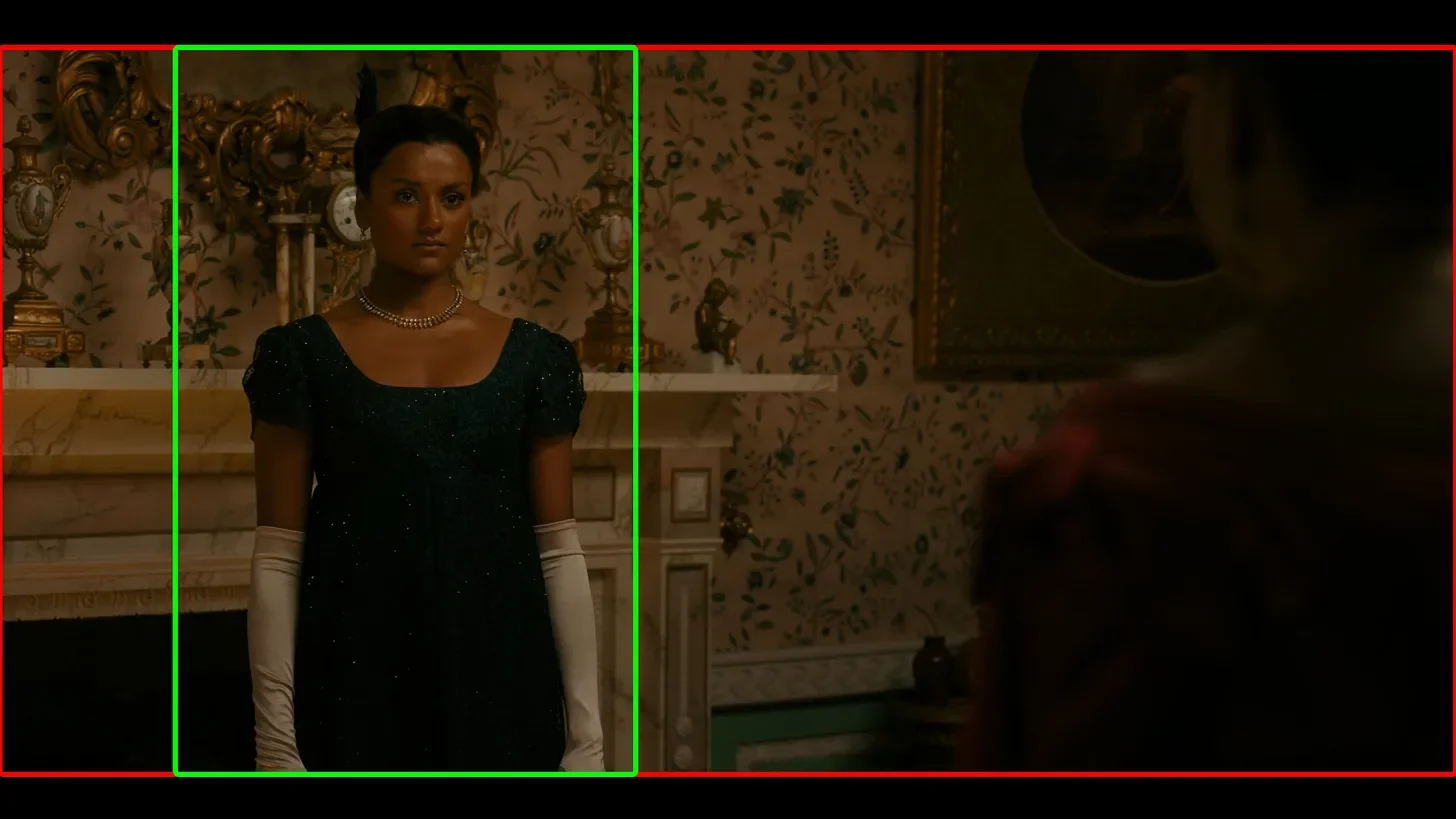
Here is a random frame of Bridgerton Season 2: The full frame is bordered in red and a 9:16 crop, ideal for mobile edited consumption, is bordered in green.
The future of the battle between aspect ratios is particularly interesting. There has almost never been ubiquity in the history of film, each studio and era featuring new technologies that had a new slightly different shape of filmic canvas. Even now while we have standard widescreen and IMAX as parallel experiences for viewers, technologies like AR and VR offer potentially limitless aspect ratios. One could very well find themselves within the content they desire to watch, unbounded by a physically mounted screen with one attached to their head and motion tracked in real time. Furthermore, who’s to say the existing conception of a phone and the shape we’ve come to expect isn’t due for a change? Regardless of where the future of filmed content goes the only certainty is that it will not stay the same. Try and keep watching video of all types, particularly those that are intentional and provide a uniquely involved experience, such as going to the cinema. Allow the craftsmanship to transport you and fully involve you in the art that you’re dedicating your time, and therefore a fraction of your life, to seeing. It’ll probably be a better experience than seeing a haphazardly cropped version spread across a hundred parts on TikTok, it might even move you.