
There’s Hope Growing in Vermont
Anyone who pays attention to anything happening right now would not be blamed for feeling despair and grief. Masked men hired by our federal government kidnap our neighbors. Our national budget funds war and genocide. We are increasingly living in a surveillance state. The little social safety net we have is being eroded.
I have been drowning in dread. To assuage this, I returned to my home state of Vermont to participate in an endeavor I jokingly referred to as my “Richard Scarry Year.” His creation of Busytown is many American children’s introduction to how the world around them works, his stories featuring anthropomorphized animals in classic professions like firemen and grocers and bakers. For the past year, I have done many Richard-Scarry-esque small town jobs: from butchering meat to working at a library to clerking at a general store. I attended school and select board meetings in tiny towns. I volunteered with local groups and went to protests. For the past few months, I’ve been traveling around the state to talk to people about local politics.
Vermont often feels shielded from the rest of the world, but the consensus is clear: pain is creeping in more than it has in recent history. In addition to the expected conversations I had about zoning squabbles and school board budgets and local scandals, I heard a level of heartbreaking existential dread I hadn’t witnessed growing up here. One farmer told me that he doesn’t go to the doctor or dentist anymore because it’s too expensive and the office is too far away for him to justify using increasingly unaffordable gas to make the journey. Another told me her land was wiped out due to flooding. She confided in me her fears of climate catastrophe. I spoke to young people who, despite working multiple jobs, have to live with their parents. A volunteer EMT explained to me how he teaches people to be prepared for protests. He told me that he used to demonstrate basic first aid and how to treat tear gas injuries. He now tells people how to stabilize bullet wounds.
Though many of these issues are reflections of our nation-wide crisis, I found hope in two innovative candidates.
Something truly beautiful happened in the Vermont State House last month. Audrey Grant has spent lots of time in the capitol building as she’s a community organizer and the program director of the ALA Green Mountain Girls State, a leadership organization designed to train teens in civics. At the mock legislative session this year, she got engaged.
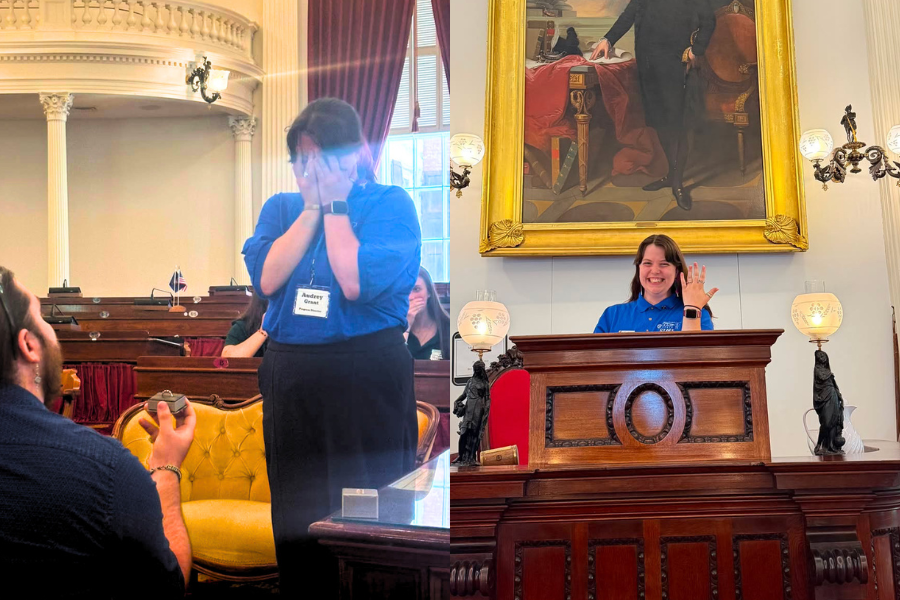
Now she’s aiming to spend even more time in the State House as she’s running for the Caledonia-2 seat against an incumbent Republican candidate. Her campaign and Kevin Bloom’s run for Chittenden County Sheriff are the two races in Vermont I’ve been watching most closely. I tracked them both down to talk about their platforms.
On a hot, unforgivingly-humid day, Bloom invited me to sit on their Burlington recording studio’s rooftop. “I had no plans to become a politician,” they admitted. “It’s just that no one else seemed to want to challenge this incredibly powerful seat. Sheriffs in Vermont are like little kings.”
The majority of the criticism I have seen against Kevin Bloom has surrounded their lack of law enforcement experience. I considered approaching this from a nuanced perspective where I discussed the fact that county sheriffs in Vermont are not a law enforcement office. I thought about talking about how successful “outsider” politicians have been in the past. But, in all honesty, we have been watching the police state in this country murder civilians. We have seen police abusing their power to stalk women with AI-powered surveillance infrastructure. We have seen brutal responses in Vermont to protestors. The Rake Vermont has released two separate reports on police misconduct. Being a cop is not an inherently positive trait in a political hopeful.
On March 11th of this year, ICE led a violent raid on a South Burlington home. Federal agents surrounded the property, clashing with hundreds of protestors outside, in search of a man who wasn’t there. The people who were inside the house included a four-year-old child. Threats of tear gassing the home and the accidental discharge of an agent’s firearm escalated the situation further. The ACLU of Vermont filed federal claims against ICE following this event. Bloom was there. They put themselves directly in front of ICE agents. “I want to use my privilege to stand against ICE,” they told me. “I already have. I will continue to do so. If elected I will refuse to cooperate.”
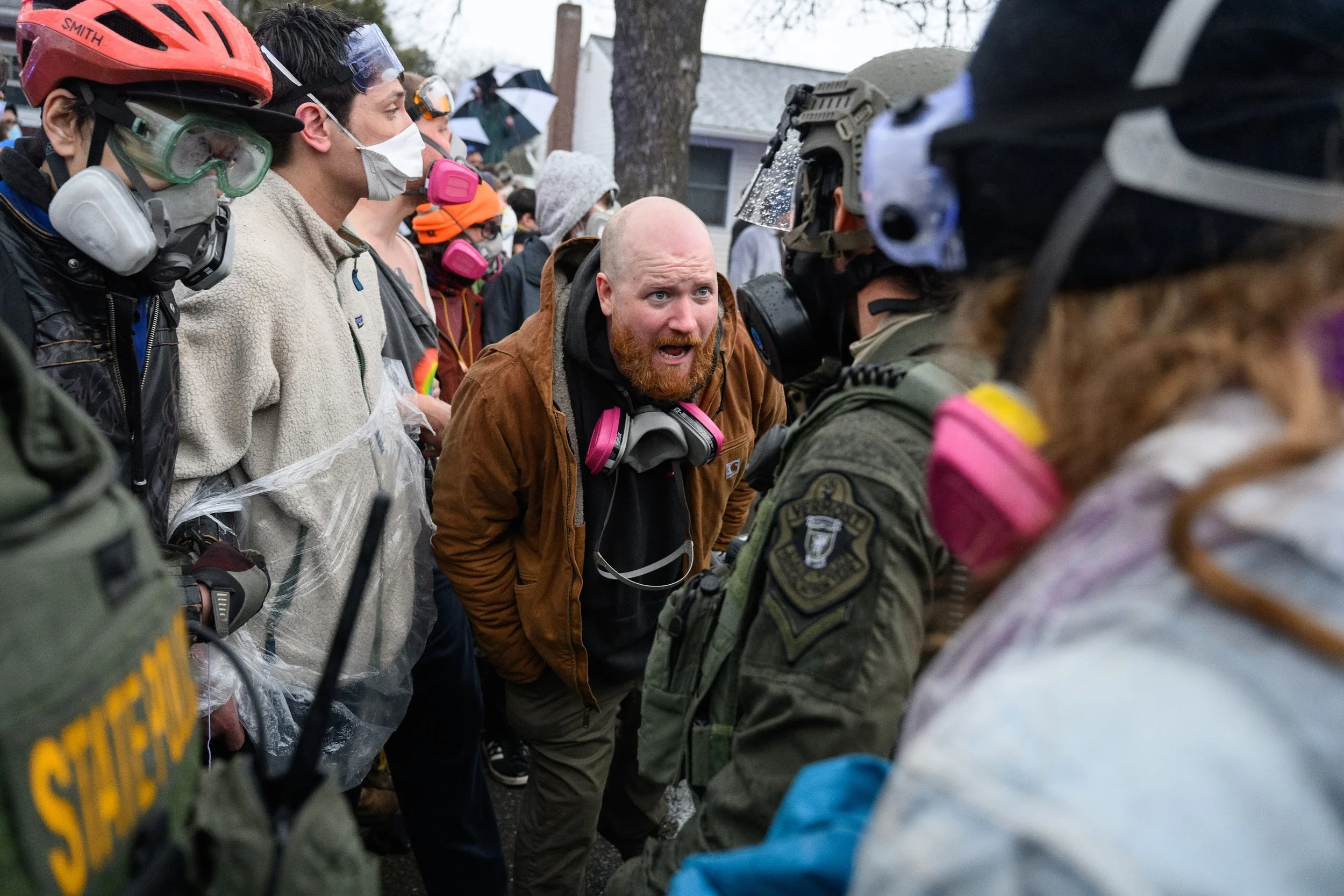
Kevin Bloom (grey fleece). Photo by Daria Bishop
They are the only candidate for sheriff of Chittenden County who has explicitly stated they believe in the abolition of ICE: “I am older than ICE as an agency. We have functioned without them before, we can do without them now.”
When asked about ICE at a public forum, Bloom’s opponent, incumbent Dan Gamelin, stated “I think Immigration and Customs Enforcement has a role in the United States government, but there’s a role that they’ve been for generations [sic]. An agency within the government. And I don’t think you’re going to ever see that agency abolished.” ICE was established in 2003.
Gamelin refused to attend the two subsequent primary public forums on June 29th and July 27th, depriving constituents of an opportunity to hear both candidates’ platforms.
Gamelin has also faced backlash for his association with Alan Bjerke, who has been connected to the re-election campaign and whose email seems to appear on Gamelin’s candidate registration statement. Bjerke is notable for his alleged stalking of a local woman and for being the first person to be convicted under Vermont’s Peeping Tom law.

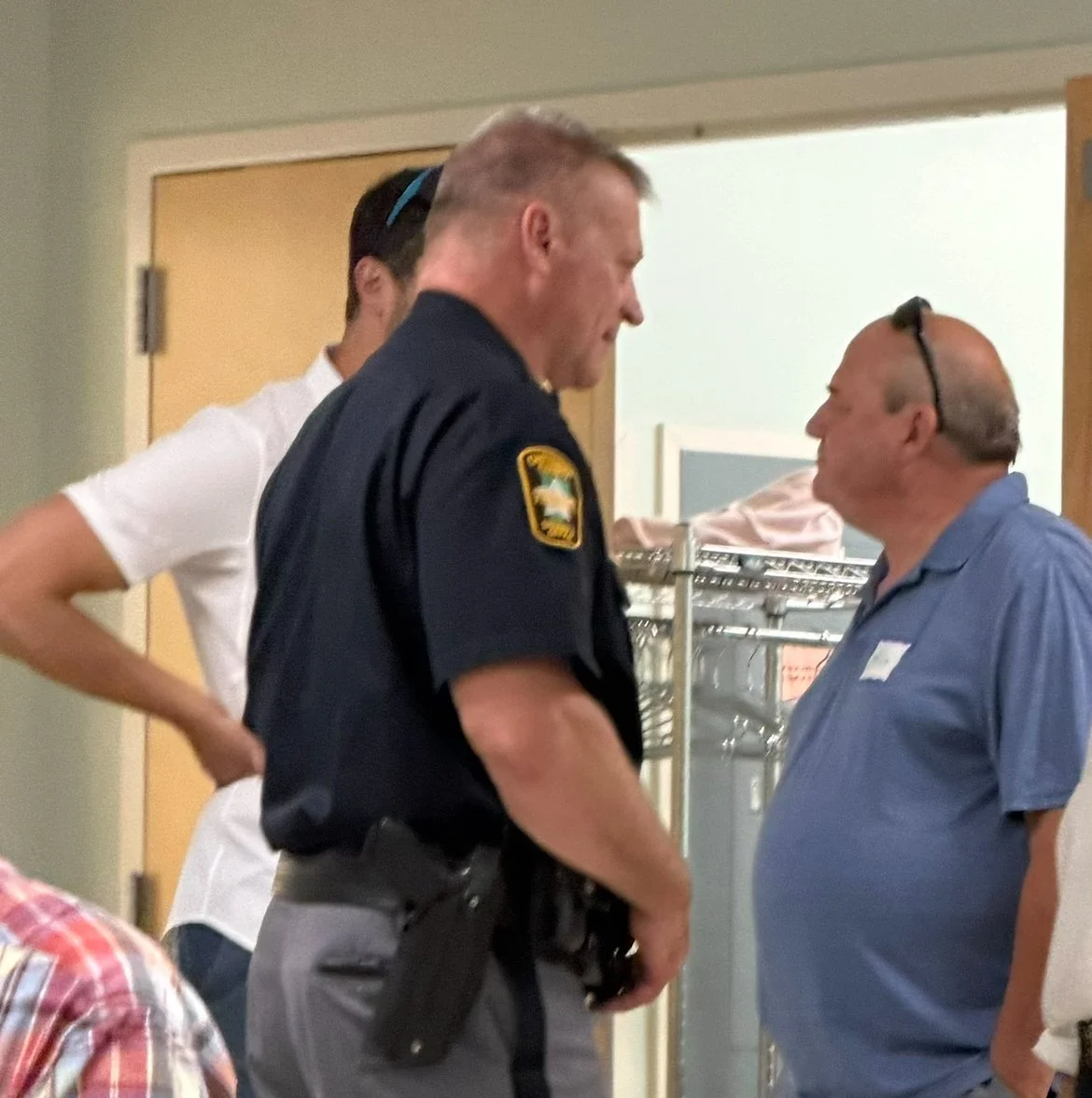
Gamelin and Bjerke pictured together at a political event
Dan Gamelin’s campaign promos highlight his high arrest numbers, his purchase of new police cars, and his mission to stop retail theft. But what many know him for is him using his position to offer paid security detail, taking in over half a million dollars from private contracts with Hannaford, Goldman Sachs, and others in 2024 alone. This booming business appeared alongside financial scrutiny. An audit of the 2024-2025 Chittenden County Sheriff’s Office found a series of material weaknesses in general disbursements, accounts receivable, and financial reporting for pensions.
One of Bloom’s campaign goals is to increase transparency, namely by making financial records public. But their main objective is simple: “if you want to reduce crime, you have to reduce it at the source. The vast majority of the crimes committed in this county are the result of desperation. If we make sure people’s needs are met instead of prioritizing policing, I think we can get there. Gamelin talks a lot about how many shoplifters he’s stopped. But, y’know, why are people shoplifting in the first place? I want to use this position to create strong community resources.”
Audrey Grant’s perspective on the role of government offices is similar. Her run for representative of Hardwick, Walden, and Stannard is grounded in community development, affordability, and infrastructure–all critical tenants in the flood-ravaged Northeast Kingdom.
“I grew up low income, the parties and the system as a whole do not help poor people. The system actively benefits from keeping people poor. That is fundamentally my political ideology. Even now that I make an above-average income for Vermont, I am one medical event away from being back in poverty. And that is true for most people. I think a lot of Vermonters don’t realize how close to poverty they are.”
One of the indicators of this proximity to poverty is Vermont’s increasing homelessness, aided by massive housing prices–the VHFA reported a 40% increase in prices since 2019. Big pushes have been made to increase development of new housing to control this upward pressure, but Grant argues this isn’t the full solution:
“We are building more units, but even if we increase the housing stock we won’t necessarily decrease the cost of housing. There’s a report from UVM that discusses this. I feel we are sometimes sold these ideas that are still rooted, at their core, in supporting capital. A lot of the money that goes, in name, towards affordable housing is going to benefits for developers and landlords. It’s about building new things. But what about all these vacant Victorians? What would it look like to have housing cooperatives? To have community-owned housing?
“There’s a program right now that’s focused on mobile homes, I’ve seen it in my own town. But what happens to mobile homes in a flood? If the home survives you still have massive issues with mold and damage. At that point you are creating a situation where the affordable option is substandard, dangerous housing for poor people. We need sustainable long-term solutions.
And, I mean, when we talk about accessible housing, why are we making the incentive structure something that prioritizes landlords and developers instead of using those resources to directly help people?”
Grant’s clarity in political thought is backed by her multiple degrees in political science and public policy, but her positions are forged through on-the-ground experience. Though she isn’t in office yet, she already has a track record as a strong community organizer and flood resilience advocate. She’s worried voices like hers might not be heard:
“In Vermont, we have a civilian part-time legislature. Because of that, you aren’t paid much. And there are no state benefits. We have seen so many young legislators who have left because it’s unaffordable to be in office. So, of course, this creates a system where people who can afford to be a politician are our politicians. It’s economically inaccessible for young, working class people to serve. And the bill to increase pay for legislators to something closer to a living wage got vetoed by our governor who makes nearly a quarter of a million dollars a year and has a helicopter. This shapes who gets to serve in a way that perpetuates inequality.”
In a world that feels like it’s crumbling around us, we deserve to have people in public offices that push for institutional, structural change instead of bandaid solutions. The work cannot be done through politics alone, but it’s time for a new generation of leaders that are willing to not only hold the line but to do the unthinkable: build something better.
There is more to this story, but we are waiting for more information to be released regarding an active lawsuit. Read the full report in the upcoming print edition of Poison Tree.
Cover Photo by Kate Warren